

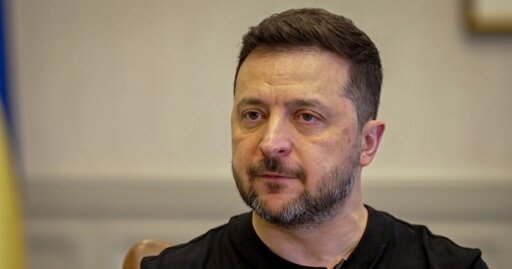
During the interview, Zelenskyy shared a summary of the daily presidential briefing he receives from Ukraine’s spy agencies. The report stated that Russian satellites had taken images of the Prince Sultan Air Base in Saudi Arabia on March 20, March 23 and March 25.
On March 26, Iran attacked the base, which hosts U.S. forces as well as Saudi troops. The strike wounded a number of American service members, two U.S. officials said Friday, though none of the injuries were considered life-threatening.
Zelenskyy said that based on Ukraine’s experience, Russia’s repeated photographing of installations over several days is an indication of attack planning.
“We know that if they make images once, they are preparing. If they make images a second time, it’s like a simulation. The third time it means that in one or two days, they will attack,” he said. The briefing did not include evidence of the Russian satellite imagery or specify how Ukraine became aware of it, and NBC News was unable to verify its accuracy.
I don’t disagree with your premise, because it is in Ukraine’s interest to push this idea as far and loud as possible.
But, I think if you read between the lines on how Ukraine is communicating their assessment on the different implications for how many times Russians take satellite photos, it sounds like the Ukrainians either have some sort of system access to Russian satellite imaging, communication intercepts, or a human source.
Of course they could just be speaking confidently about the number of images taken to advance their own goals, with no actual intelligence behind it, but I don’t think he’d put himself in that position.
But, who knows? You know as much as I do.
They can probably tell from satellite repositioning and data volumes coming from the sat. Even for spy satellites orbital data is available in public tracking databases.