

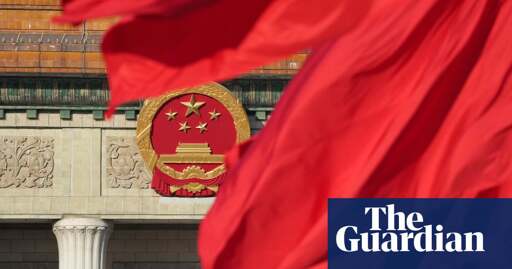
- China’s National People’s Congress (NPC) is expected to approve a new “ethnic unity” law during its annual legislative session.
- The law aims to strengthen a shared national identity among China’s ethnic groups under the concept of a unified Chinese nation.
- It prioritizes Mandarin Chinese in education and public life, reducing the role of minority languages such as Tibetan, Uyghur, and Mongolian.
- Authorities frame the law as promoting “ethnic unity and progress” and national cohesion.
- Critics (including rights groups) say it institutionalizes assimilation policies and increases political control over minority groups.
- The law is tied to Xi Jinping’s “Sinicisation” policy, which encourages minorities to integrate into Han Chinese culture.
- Some analysts say it formalizes policies already implemented in regions like Xinjiang, Tibet, and Inner Mongolia.
- Provisions also encourage integration measures in areas such as education, migration, housing, and interethnic relations.
- The NPC session will also approve other major items including:
- A new environmental code to unify environmental laws.
- China’s 2026–2030 five-year economic plan and annual budget.
- The parliament is widely seen as a rubber-stamp body that almost never rejects proposals put forward by the Communist Party leadership.
As far as I know there were also advantages for minorities in China, e.g. excemptions from the one child policy. So why the overall push that must create resistance? It’s exactly what the US needs to build an opposition.