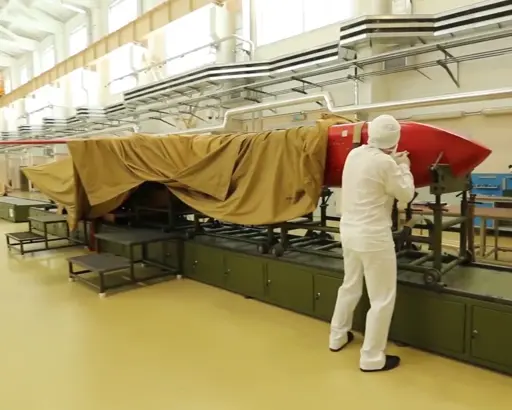
The Russian 9M730 Burevestnik cruise missile (NATO designation: SSC-X-9 Skyfall) uses a direct-cycle air-breathing nuclear propulsion system that leaves a radioactive trail behind it.This conclusion was reached by two scientists […]
Your explanation makes sense to me (a very non-physicist), but I remember more than one journalism piece from a decade or so ago about uncharacteristically high rates of cancer in areas in Afghanistan or Iraq that were basically carpeted with US depleted-uranium bullets. Do you think that’s a fluke? Is it possible there is poor quality control in manufacturing the bullets, resulting in some stuff with shorter half-life in there? Could the cancer rates be due to the heavy-metal properties?
(Of course it’s a correlation/causation thing, so there could be other causes, too, but I’m interested in what you think of this)


Your explanation makes sense to me (a very non-physicist), but I remember more than one journalism piece from a decade or so ago about uncharacteristically high rates of cancer in areas in Afghanistan or Iraq that were basically carpeted with US depleted-uranium bullets. Do you think that’s a fluke? Is it possible there is poor quality control in manufacturing the bullets, resulting in some stuff with shorter half-life in there? Could the cancer rates be due to the heavy-metal properties?
(Of course it’s a correlation/causation thing, so there could be other causes, too, but I’m interested in what you think of this)
Probably from the chemical properties; very unlikely from radiation.
Reading through this. There are plenty of carcinogenic chemicals such as arsenic, beryllium, cadmium, chromium, cobalt…