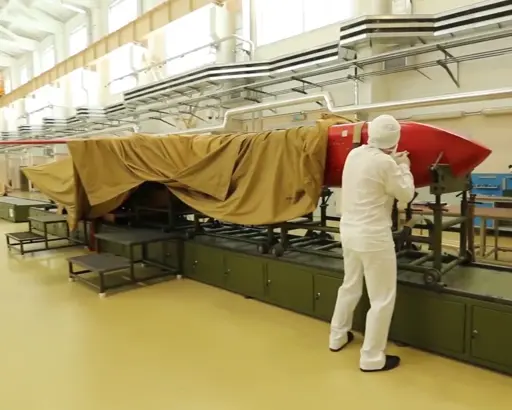
I vaguely remember that 1970’s USA proved this was a viable technology alongside the nuclear powered jet engine but decided to not pursue it because this would be a terrible direction for the arms race to go.
The US uses warheads and artillery rounds with depleted uranium and they’ve deployed them extensively during their invasion of Iraq. They also give a ton of them to Israel who uses them a plenty against Palestinians in Gaza.
Russia can get fucked, but I’m not going to put the US on a pedestal here.
U-238 (the most common isotope in natural uranium, present to an even higher degree in depeleted uranium which has had the shorter-lived U-235 removed) has a half life in the billions of years and with such a long half-life life even with a large mass of the material you won’t be getting many radiological decays occurring. Which is not to say it’s good for you to ingest or contact, it’s definitely not, but that’s more due to the chemical properties it has as a heavy metal (think like how lead is bad for you) than its radiological ones.
Fission products formed in a nuclear reactor on the other hand have half lives all over the place from tiny fractions of a second to days, years, millions of years and so on. So you can get a high dose from short-lived isotopes going through many decays if you happen to be around them while they’re freshly generated, and intermediate life isotopes can persist in the environment for sustained periods while still dosing up the area. So a flying nuclear reactor venting its exhaust over you is quite a lot worse radiologically speaking than some depleted uranium being in your environment, though that said the chemical properties of having uranium in your drinking water or the physical properties of a high density round shot at you are plenty bad regardless of the radiological harm being often overstated.
Your explanation makes sense to me (a very non-physicist), but I remember more than one journalism piece from a decade or so ago about uncharacteristically high rates of cancer in areas in Afghanistan or Iraq that were basically carpeted with US depleted-uranium bullets. Do you think that’s a fluke? Is it possible there is poor quality control in manufacturing the bullets, resulting in some stuff with shorter half-life in there? Could the cancer rates be due to the heavy-metal properties?
(Of course it’s a correlation/causation thing, so there could be other causes, too, but I’m interested in what you think of this)
Probably from the chemical properties; very unlikely from radiation.
Reading through this. There are plenty of carcinogenic chemicals such as arsenic, beryllium, cadmium, chromium, cobalt…
Did I say worse or better? Reread what I said and answer within context.
The premise once again for the pedantic minded - Russia can get fucked, but don’t put the US on a pedestal
Radiological harm being often overstated
Incorrect, if anything, understated - but because it’s a bunch of brown people and nobody cares enough to read the research
https://www-pub.iaea.org/MTCD/Publications/PDF/Pub1434_web.pdf
Now apply those findings to a small enclave like Gaza.
I’m speaking to radiation since that’s my interest. The specific activity of uranium is generally around 14.8 Bq/mg vs. 25.4 Bq/mg for natural uranium, where one Bq is one nuclear transformation per second. That sounds like a lot but as far as radioactive materials goes is incredibly low. The Americium-241 used in smoke detectors for instance has 127 million Bq/mg.
Incorrect, if anything, understated - but because it’s a bunch of brown people and nobody cares enough to read the research
As I said before there certainly are health impacts but they are largely arising from the chemical toxicity, not the radiological activity. It is ONLY the radiological aspect where I said the risk was overstated, I recognize that the chemical one is very real. For example, the WHO 2001 report on depleted uranium that your second source cites gave a limit on depleted uranium of 0.28 mg/L in drinking water for its radiological toxicity… and a 140x smaller (!) provisional guideline of 0.002 mg/L for the chemical toxicity.
Your third source states this in its summary:
In this report, it is concluded that the radiation doses from DU do not pose a radiological hazard to the population at the four studied locations in southern Iraq. The estimated annual committed effective radiation doses that could arise from exposure to DU residues are low, always less than 100 µSv/a and only to a few, if any, individuals, and therefore of little radiological concern. The estimated radiation doses are less than those received on average by individuals from natural sources of radiation in the environment (worldwide average 2.4 mSv/a), below internationally recommended dose limits for members of the public (1 mSv/a) and below the action level of 10 mSv/a set out in the IAEA Safety Standard on Remediationof Areas Contaminated by Past Activities and Accidents [1] to establish whether remedial actions are necessary.
I’m glad you have interests…but we don’t share them.
Do you think this is going well for you? Because it’s not.
I’m sorry, was this supposed to be an argument? Can you point out the premise?
I feel like you didn’t actually read the papers you linked.
They show elevated health issues. The person who responded to me is differentiating between radiation and toxicity. But the primary detriment and premise is still health issues to civilians caused by munitions.
The issue is you made this comment:
> Radiological harm being often overstated Incorrect, if anything, understated
We’re not arguing that DU isn’t toxic, just that it’s probably not due to its radioactivity.
Saying someone in that country made the right call is decisively NOT the same as putting that entire country on a pedestal
Who made the call?
What does it matter? The point is that saying that a single person making the right decision is not the same as putting the entire country on a pedestal
Oh I didn’t mean to praise the USA. We’re also one of the last countries to use cluster munitions and white phosphorous. Also the “Highway to hell” make it clear that entrapping and slaughtering retreating forces is A OK!
This isn’t news…
This one is a decade old but they had something like it during the 80s too
The US had one in the 60s: https://en.wikipedia.org/wiki/Project_Pluto
It was shelved for being just too horrible.
Its basically a phyric victory machine, the act of using it destroys anything of value in the territory gained including the abiltiy to even use the space itself.